
Niederburg, a small village on the Rhine, in 1925. The church bell rings the late-morning Angelus, and villagers gather at the house of the village head. Each of them draws a lot. It might be a little stick of brushwood, cut with one notch, two notches, or more.1
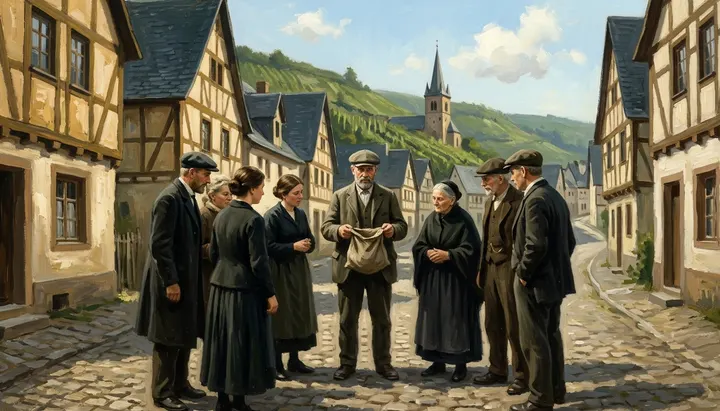
The lot decides your turn at the village oven tomorrow. And the person who draws the first lot has a job nobody wants: they have to light the cold oven and heat it up for everyone else.1
So why not simply bake at home? The answer has much less to do with cosy community spirit than you might think, and a lot more to do with wood, fire and power.
The player loads from YouTube (privacy-enhanced mode) only when you press play. Watch it on YouTube.
An oven that eats wood
Start with the oven itself. A traditional bread oven is a vaulted chamber of brick or stone. You build a fire inside it and let it burn for a long time until the walls are hot. Then you rake out the embers and bake in the stored heat.2
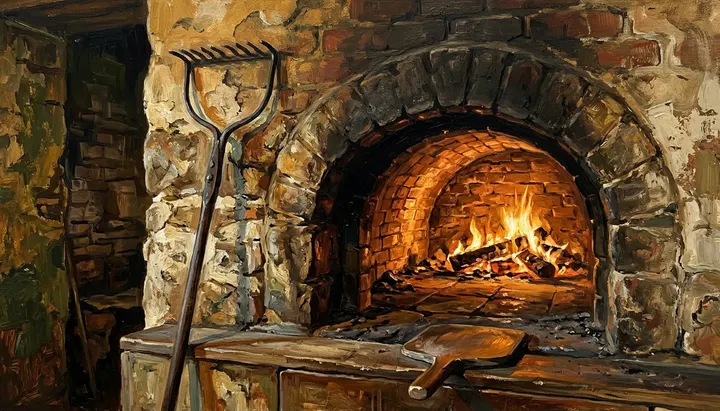
That takes a great deal of fuel, and the first firing of the day is the most expensive, because the oven starts cold. Whoever bakes second or third gets the warmth left behind for very little wood.2 That is why Niederburg's rules made the first lot-holder do the heating. After a Sunday or a holiday, when the oven had cooled right down, the families took turns at being first, so that no one paid that extra cost every time.1
Now multiply that by every household. If each family heated its own big oven, a village would burn through its woods fast. One shared oven, used batch after batch, got far more bread out of every bundle of brushwood.3
Fuel shaped how often people baked, too. In Niederburg, most families baked only every two to four weeks. The bread was then stored dry in the cellar until their next turn.1
The fear of fire
The second reason was fire. Picture a village of timber-framed houses, some with thatched roofs, packed close together.3 Now picture a fierce oven fire in every one of them.
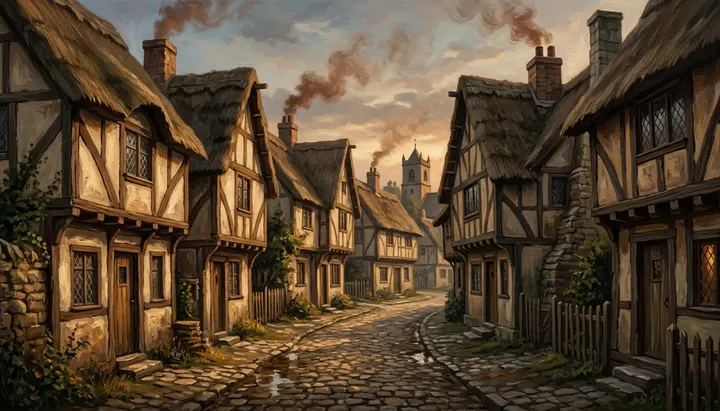
Ahrweiler, a small walled town in the Rhineland, shows how the authorities answered that risk. The town was divided into four quarters, called Huten, and each quarter had its own bakehouse, looked after by a master of the bakehouse. Running a private oven was forbidden because of the danger of fire. Sharing ovens was also meant to save valuable firewood. And the bakehouses stood against the town wall, away from the houses, so that a blaze would be less likely to spread.4
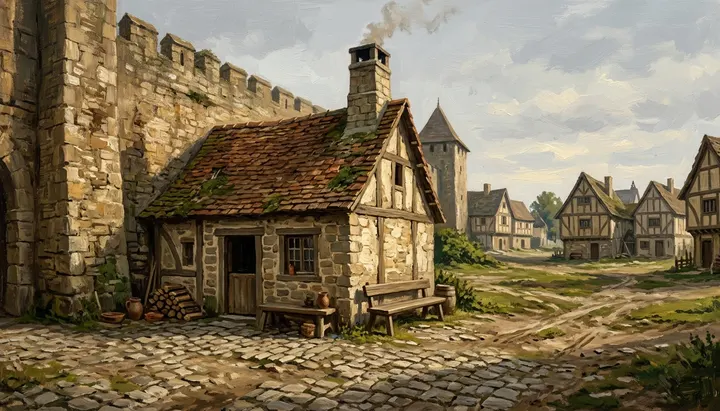
Ahrweiler wasn't unusual. In the 1600s, rulers in German lands began to restrict ovens in private houses, and in Württemberg a fire-fighting ordinance of 1808 pushed things further still.5 That is how the village bakehouse, the Backhaus, came to be such a familiar sight in the German countryside.
Even in 1925, Niederburg's rules opened with the aim of preventing fire, and they ended with fire safety. No fire was allowed in the oven once night fell, and the last embers had to be carried away in a closed metal container.1
The lord's oven
So far, the reasons sound sensible: save fuel, prevent fires. But in much of France, a third reason mattered most. Sometimes you had to use the shared oven, because the local lord owned it.
Historians call these rights banalités. Under them, peasants had to use the lord's mill to grind their grain, his press to make their wine, and his oven to bake their bread. They paid for it, too, usually in kind: a share of the flour, the wine or the loaves.67
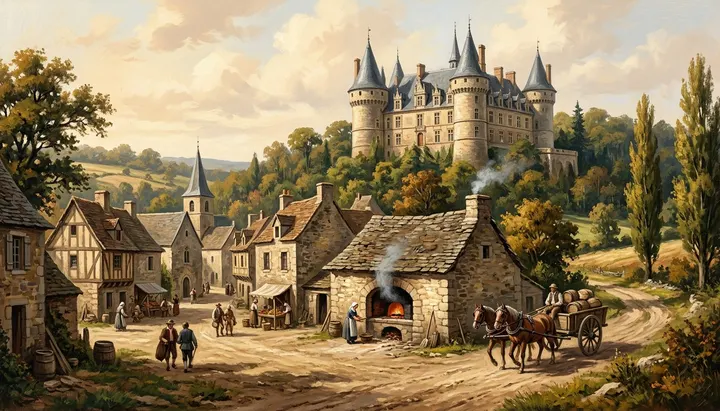
The lord's oven was called the four banal, and every batch of bread baked in it earned its owner a fee. Lords had claimed monopolies like this since around the eleventh century.6
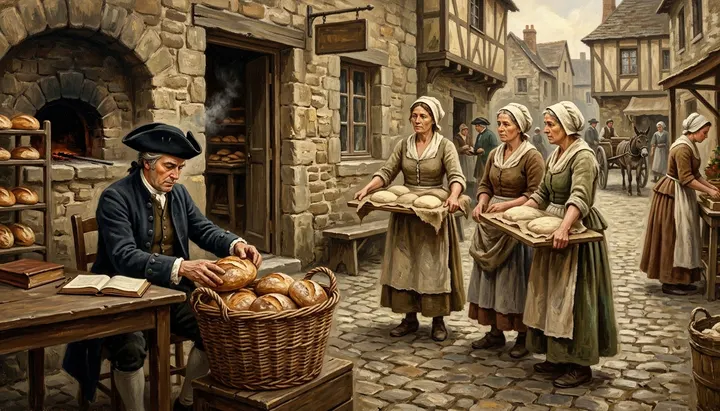
These rights only began to fall with the French Revolution. In August 1789 the new National Assembly declared the feudal regime abolished,8 and the lords' monopolies were dismantled over the years that followed.9
So here is the first big lesson. The popular image of the village oven is all about togetherness. The evidence shows it was often about control: of fuel, of fire and of money. The friendship around it was real, but it grew up around rules.
Spain: paying in bread
Spain had its own version, with its own word. In many Spanish towns the shared oven was known as the horno de poya. The poya was the fee for baking, and it was often paid in bread, dough or money.101112
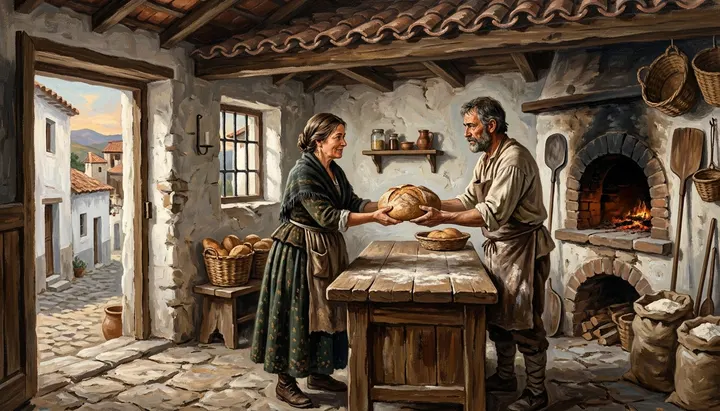
Town rules set the fee precisely. In 1547 an ordinance in Monda, a town near Málaga, told the oven workers to take one loaf of poya out of every twenty they baked, large or small, and no more.10
Who owned the oven depended on where you lived. Local histories from Castile describe a common pattern: in towns under the Crown, the oven usually belonged to the town council; in towns held by a lord, it usually belonged to him, and neighbours could be forbidden to build their own.1112
Near Valencia, in the town of Alaquàs, you can still see one: the Forn de la Senyoria, the Lord's Oven. Records of it go back to the 1400s. The lord rented it out to a baker and paid for the major repairs. It baked loaves darker than the bread served on wealthier tables, as well as pastries, and sometimes roast meat. Women brought their own dough to be baked, and the oven became a meeting place.13
When the Marquis of Manfredi took possession of Alaquàs in 1772, the records name one of the oven's tenant bakers, a man called Lorenzo Marco. The lordly rights were abolished in the 1800s, but the oven carried on as a bakery until the early 1970s. Today it stands empty, and in 2021 local campaigners asked the town council to buy it and restore it.13
London: the Christmas goose at the baker's
In Britain, the shared oven took a different shape. In crowded Victorian London, many working families had no proper oven at all. So where did a family roast its Christmas dinner? At the local bakehouse.14
The custom was common enough to appear in the Illustrated London News. On Christmas Eve 1853 its Christmas supplement printed an illustration by the artist Phiz called The Goose Club. Members of goose clubs saved up through the year for a Christmas bird. Many had no oven big enough to roast a goose, so they prepared it at home and carried it to the baker on Christmas morning.14
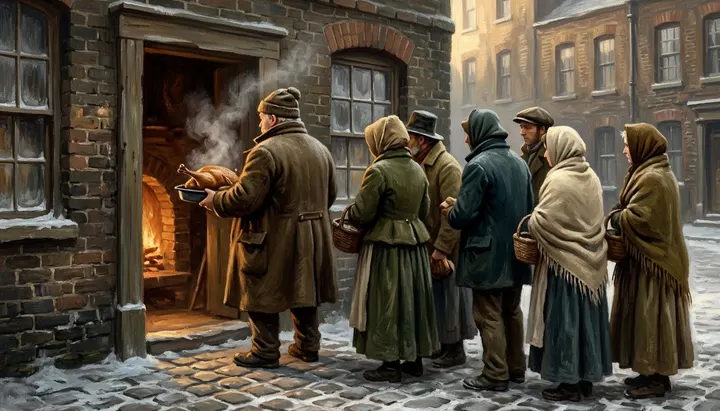
Charles Dickens put the same scene into A Christmas Carol in 1843. As the Ghost of Christmas Present walks with Scrooge, crowds of people pour out of the side streets, carrying their dinners to the bakers' shops.15 The Dickens scholar Michael Slater explained why the ovens were free: on those days bakers were barred by law from baking bread, so people took their joints of meat to the bakehouses to be cooked instead.14
Fez: a shared oven that still works
If you want to see a shared oven in daily use today, go to Fez in Morocco. Families, usually the women of the house, make their round loaves, called khobz, at home, to their own recipes. Then the risen, unbaked loaves are carried to the neighbourhood oven and collected later.16
How does the baker know whose bread is whose? At one bakery described by the American food writer J. M. Hirsch, the baker presses a pattern of dimples into each loaf with a stick. Each family's code is literally baked in.16
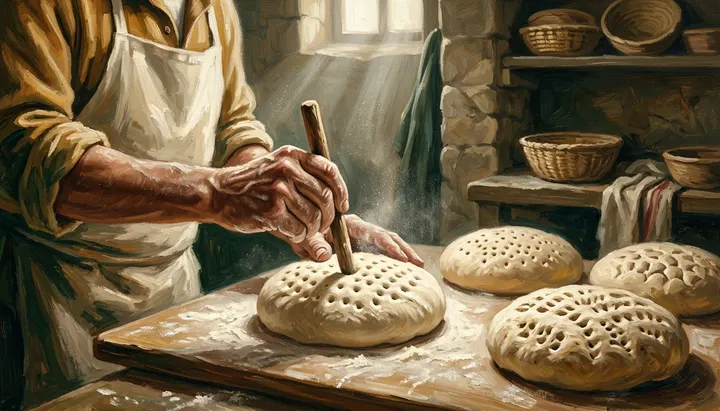
The price is tiny: half a dirham a loaf, about five cents. That one bakery turns out around three thousand loaves a day; about half are for shops and restaurants, and the other half come from the neighbours' kitchens. Even here, though, the number of communal ovens is falling, as more women work outside the home.16 It is the same pressure that emptied the European bakehouses: when time grows scarcer than fuel, the old arrangement starts to fade.
Life around the oven
None of this means the shared oven was only about rules and fees. In German villages, bake day was also a chance to meet, and people who baked there as children still remember the village gossip while the bread was in the oven.5
Back in Niederburg, the 1925 rules show how carefully that sociability had to be managed. The village actually had two ovens: the right-hand one for the upper village, and the older left-hand one for the lower village.1
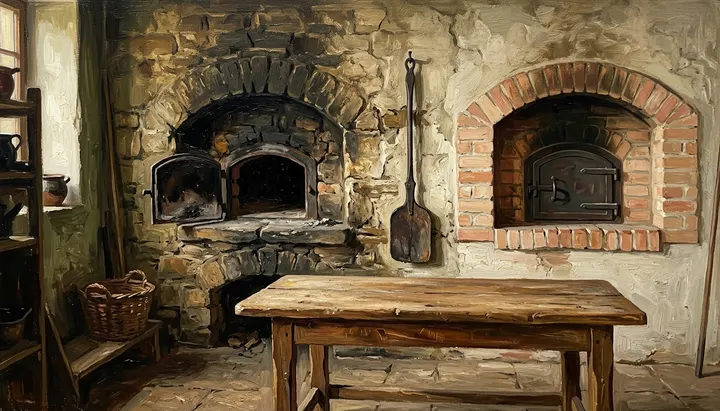
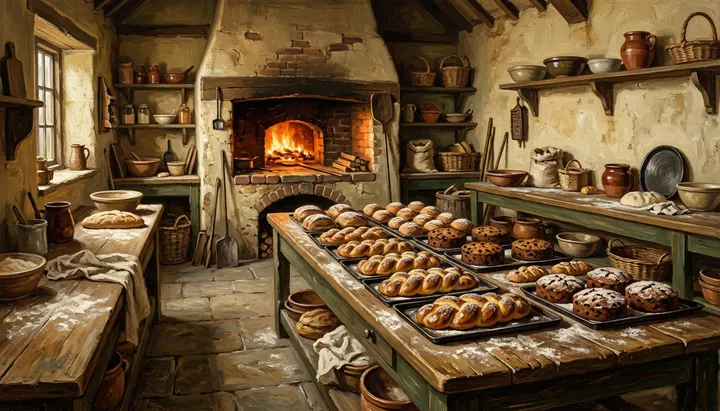
The rules also made room for life's big moments. Anyone with a wedding, a christening or a funeral could choose their own turn at the oven instead of drawing a lot. And for two days before Christmas, Easter, Whitsun and the village fair, no bread could be baked at all: the oven was kept for cakes.1
Why the ovens went quiet
So what happened to them? In Niederburg, almost every family went on baking in the village bakehouse until the 1970s.1 Elsewhere, some bakehouses fell out of use and came close to being pulled down.5
The reasons for sharing slowly faded. More and more homes had stoves of their own, and bread could simply be bought. In Niederburg, the bread that once went to the cellar ended up in the chest freezer instead.1
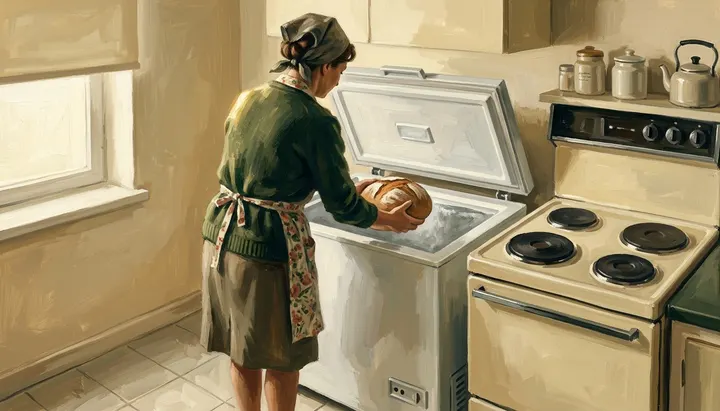
In other words, the shared oven solved problems that most households no longer have. Fuel became cheap. Fire became something you could control with a dial. And the lord who once took his share of every batch had long since gone.
But the old ovens haven't all gone cold. In many German villages, local clubs hold bakehouse festivals, where people bake bread in the old ovens again.5 Niederburg's local heritage society has held its own festival for more than fifty years. A few families there still bake farmhouse loaves regularly, and groups of young people meet now and then to bake together.1
In Ahrweiler, one of the old quarter bakehouses was destroyed in the Second World War, and its site was used for an electricity substation. In 2000 local people got together and rebuilt it as a simple timber-framed bakehouse. Today it is used mainly for celebrations.4
So why one oven?
Because wood was precious, and fire was terrifying. And because, very often, a lord made money from it. The friendship that grew up around the bakehouse was real, but it came second.
It left a mark on how we eat, too. Big loaves that keep for a fortnight, a fixed day for baking, cakes saved for the holidays: all of these patterns were shaped by the cost of heating one oven for many people.
Next time you buy a loaf, it might be worth remembering the notched sticks, and the neighbour who had to light the cold oven first.
Did your town or village ever have a shared oven, or a baker who baked bread for the whole street? Tell us in the comments under the video on YouTube.