
Picture a Monday morning in a Birmingham workshop in the 1850s. The door is unlocked and the tools are laid out on the bench, but nobody is working. The men who work here have taken the day off without asking anyone. They even have a name for it: Saint Monday, as if it were a holy day.1
So who gave us Saturday? Why do most of us stop work on two particular days, and not one, or three? The answer runs through a Roman emperor, English factory owners and a Ford assembly line. It even includes a German poster written in a child's voice.
The player loads from YouTube (privacy-enhanced mode) only when you press play. Watch it on YouTube.
A day of rest is not a weekend
The day of rest is far older than any weekend. For Jewish communities it was the Sabbath, on Saturday. Christians in Europe kept Sunday, a custom that grew out of the older Sabbath.2
The first Sunday law we know of came from Rome. On 7 March 321, the emperor Constantine ordered judges, townspeople and craftsmen to rest on what his law called "the venerable day of the Sun".34 Farmers were exempt: if the weather was right for sowing or for the vines, they could keep working. Even at the very start, the day off came with exceptions.3
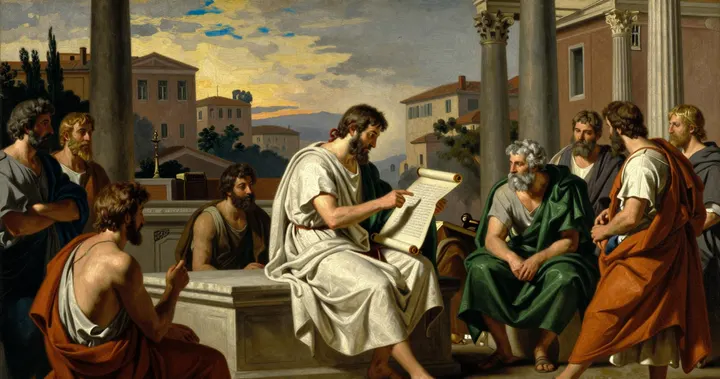
For more than a thousand years, that was the shape of the week: six days of labour and one of rest. And the one day was not free time as we know it. It belonged to church, to family duty and, often, to strict rules.
A weekend is something different. It is two days in a row, and at least one of them is yours to spend as you like. That idea did not come from emperors or bishops. It came, oddly enough, from workers who simply stopped turning up.
Saint Monday
In the 1700s and 1800s, many English craftsmen were not paid by the hour. They rented space in a workshop and were paid for the finished goods, delivered each week. So their week had a rhythm of its own. From Tuesday onwards they worked hard, and on Saturday night they rushed to finish the orders and collect their pay.1
Then came Sunday. And then, quite often, came Monday too. Monday was for recovering, for visiting, for the pub and for amusements. Historians call this custom Saint Monday. There was nothing religious about it: the name borrowed the feel of a saint's day, but the holiday was entirely the workers' own idea. It was so popular that music halls, theatres and singing saloons put on special shows on Mondays.1
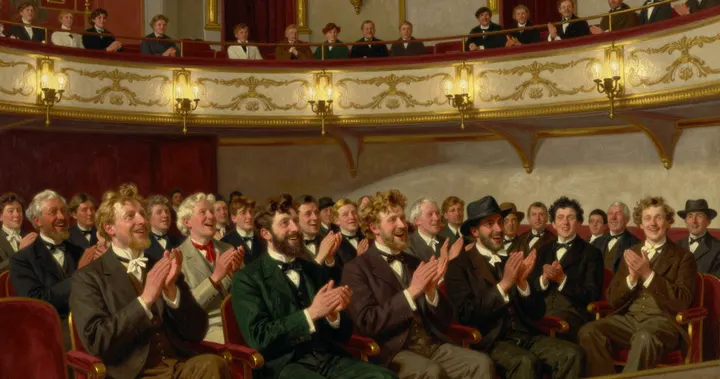
Factory owners hated it. A steam engine costs money whether anyone is standing next to it or not, and an empty Monday meant idle machines and orders running late. Reformers disliked it too, for different reasons: they linked Saint Monday with heavy drinking and with blood sports such as cockfighting. And yet, in some trades, the custom held on into the 1870s and 1880s.1
So both sides had a problem. Workers wanted rest they could count on. Employers wanted a full, predictable working week. The solution they reached is the hidden reason we have a weekend at all.
The Saturday bargain
In 1842, campaigners in Britain founded the Early Closing Association. Its offer was simple: give workers Saturday afternoon off, and in return they would turn up for a full day on Monday.1
The association opened branches in manufacturing towns. Its members were local worthies: factory owners, clergy and civic leaders. They argued that a half-day on Saturday would produce a sober, steady and hard-working labour force. Churchmen joined in for their own reasons. In 1862, a clergyman named George Heaviside wrote in the Coventry Herald that a Saturday break would refresh workers. A man who had already had his fun on Saturday, the argument went, would be in church on Sunday.1
The law helped too. Under the Factory Act of 1850, women and young people in textile mills had to stop work at two o'clock on Saturday afternoon.6 In the Lancashire cotton towns, mill owners later gave way, with some reluctance, and let the men stop then too.5
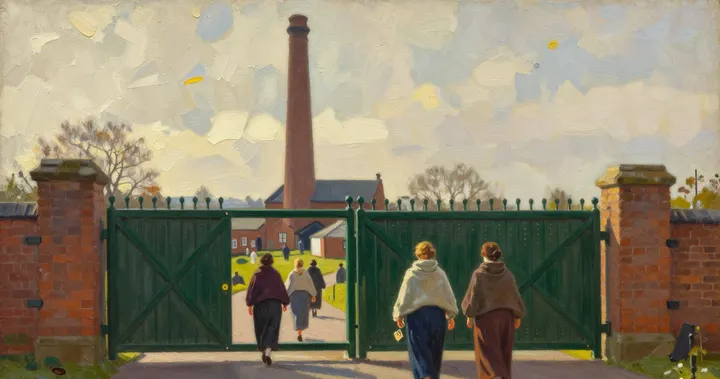
The reformers had a plan for those free hours. They called it "rational recreation": leisure meant to pull workers away from the pub and towards something improving. In Birmingham in the 1850s, the association suggested in the Daily News how Saturday afternoons might be spent: trips into the country, work in the garden, or the improvement of mind and body.1 Whether workers took that advice is another matter.
Now Saturday afternoon was free time that everyone shared, and businesses noticed. Railway companies offered cheap Saturday tickets for day trips into the countryside. Theatres and music halls moved their star acts from Monday to Saturday afternoon. And in the 1890s, football took off. Saturday afternoon became the time for the match, and in much of Britain it still is.1
Notice what happened here. The weekend was not handed down as a gift. It was a trade. Workers gave up Saint Monday, and in exchange they got a Saturday afternoon that nobody could take away.
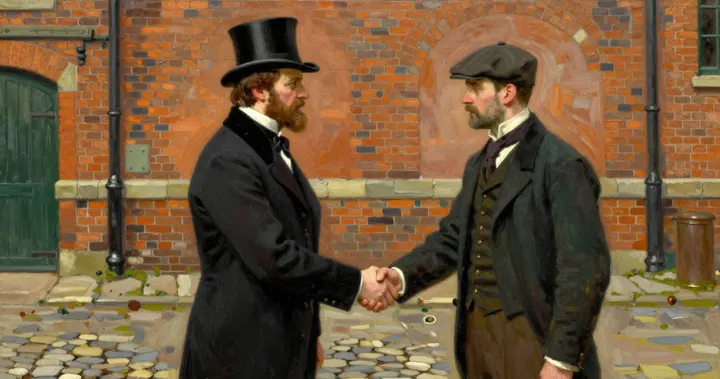
By the end of the 1800s, Saturday afternoon and Sunday had become the recognised end of the week.1 Around then the word itself appears. In 1879, a reader of the magazine Notes and Queries described a habit in Staffordshire: if someone left home after work on Saturday to spend the evening and Sunday with friends far away, people said they were spending their "week-end" there. There are scattered earlier uses, but this is the one usually quoted as the word arriving in England.72
Did Henry Ford invent the weekend?
There is a popular story that Henry Ford invented the weekend. It is a good story, but by the time Ford acted, Britain had kept its Saturday half-holiday for decades.18 What Ford did was help turn the half-day into a whole one.
In America, the push for a full Saturday off had an unexpected source. For Jewish workers, Saturday was the Sabbath, but the working week was built around a Christian Sunday. Only a two-day break could respect both. In 1929 the Amalgamated Clothing Workers of America, a union whose members were mostly Jewish, became the first union to propose a five-day week.2 But by then, a far bigger name had already moved.
As early as March 1922, Edsel Ford, the company's president, talked publicly about a shorter week. In 1926, Ford moved its factory workers to five days of eight hours: forty hours in all. The company announced it to the press that September.89
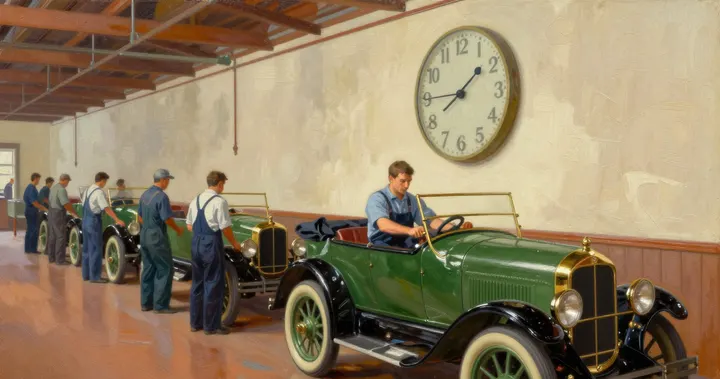
Henry Ford argued that workers' leisure should not be seen as "lost time" or as a privilege of the rich.8 He also argued that leisure drives spending: people with more free time, he said, need more clothes, eat a greater variety of food, and travel more. In vehicles, naturally.10 And he was frank that he expected men to work harder in the hours they were there. A shorter week was good business, not only kindness.810
Ford had made a bold move like this once before. In 1914 the company announced a minimum wage of five dollars for an eight-hour day; before that, the going rate had been two dollars and thirty-four cents for nine hours.8 In October 1926, the company's own newspaper, Ford News, compared the new five-day week with that famous five-dollar day.9 Ford clearly saw both as the same kind of idea: pay and time that turned workers into customers.
Ford wasn't even first. Some textile mills in New Hampshire seem to have adopted the five-day week before he did. But Ford was big, famous and loud, and so the story attached itself to him. Not everyone copied him, either. The cereal makers at Kellogg's tried six-hour shifts instead. Economists argued, some bosses called the five-day week a mistake, and labour leaders were divided.9
What settled it was the law. In 1938, Congress passed the Fair Labor Standards Act. It set a maximum of forty-four hours a week in the first year, forty-two in the second and forty after that. Longer hours had to be paid as overtime.9 Forty hours, spread across five days, left Saturday and Sunday free. The American weekend was born from a mix of faith, a car maker's sums and a federal law.
The country that abolished the weekend
The weekend is easy to take for granted, so it is worth looking at a place that tried to get rid of it.
In 1929 the Soviet Union introduced what it called the continuous working week. Factories would never stop. The week was cut to five days: four days of work and one of rest. But workers were split into five groups, each with a different day off. Groups were often marked by colour, so that red might rest on one day and green on another. Some workplaces used symbols instead, such as a red flag or an aeroplane. Only a handful of holidays were shared by everyone, such as the first and second of May.11
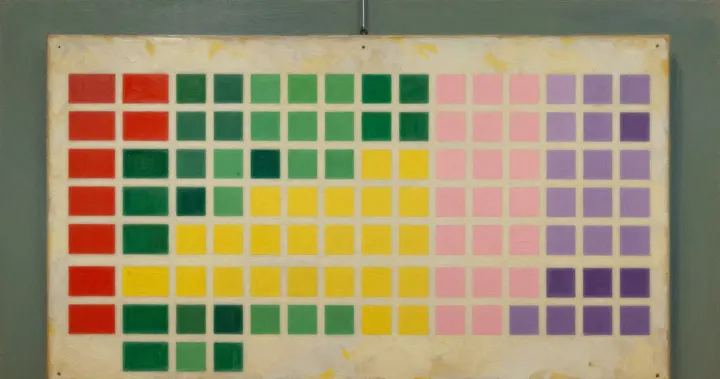
Within a year, most industrial enterprises had switched, along with many offices, shops, cinemas and restaurants. The machines kept running. The families did not. A husband might rest on one day while his wife worked, and his friends rested on another day again. In October 1929, the newspaper Pravda printed workers' complaints about this.11
The scheme also brought problems in production: worn machinery, muddled shifts and supply shortages. In June 1931, Stalin himself criticised how hastily it had been introduced. Soon afterwards it was replaced by a six-day week in which everyone rested together, on the 6th, 12th, 18th, 24th and 30th of each month. Finally, on 26 June 1940, the old seven-day week came back.11
The lesson is a quiet one. A weekend isn't only about time off. It's about time off together.
"On Saturdays, Daddy belongs to me"
West Germany came to the five-day week late, and it argued about it loudly. Before the Second World War, the industrial week had been about forty-six hours. In the post-war boom, hours went up, not down: by 1950 the average week in industry was forty-eight hours, spread over six days, and by 1955 it was forty-nine.12
The unions answered with a plan. In 1955 the trade union federation, the DGB, demanded five days of eight hours with no cut in pay. Its May Day slogan that year was blunt: forty hours are enough, five days are enough. The next May Day, in 1956, the DGB tried something gentler. Its poster spoke in the voice of a child: "Samstags gehört Vati mir". On Saturdays, Daddy belongs to me.13
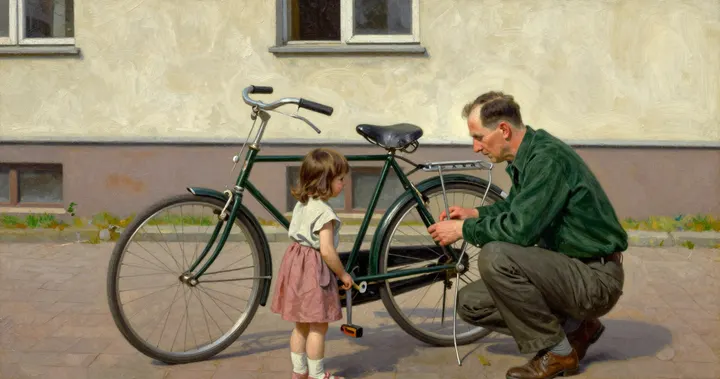
It worked because it wasn't really about hours. It was about families. The free Saturday came industry by industry: coal mining in 1959, insurance in 1960, banking in 1961. The big metal industry agreed a forty-hour week in 1967.12
Spain took a different road. Its first great rest law, of 3 March 1904, was about Sunday: it made Sunday a day of rest from most paid work.1415 And when the idea of a short Saturday arrived, Spanish gave it a telling name. The Royal Spanish Academy's dictionary records the semana inglesa, the "English week": a working week that ended at noon on Saturday.16 Across the Atlantic, a 1938 decree in the province of Buenos Aires regulated the sábado inglés, the "English Saturday", with work allowed until one in the afternoon.17 The name tells you where people thought the custom came from.
Why it stuck
Back in Britain, the full two-day weekend became established in the 1930s.1 In 1934 the chemist firm Boots tried a five-day week, with Saturday off, for many of its staff. Absences fell noticeably, and some departments even got more done.1819
So why did the weekend survive when so many other schemes failed? Partly because it was useful to almost everyone. Employers got a full, sober Monday; workers got rest they could plan around. And businesses found that free time could be sold: railway excursions, Saturday matches, cinema shows and Sunday drives. Once whole industries depended on Saturday afternoon, it became very hard to take away.
But the deepest reason is the one the Soviet experiment exposed. A weekend is a shared clock. It only works because your neighbours, your children's school and your football club are all resting at the same time.
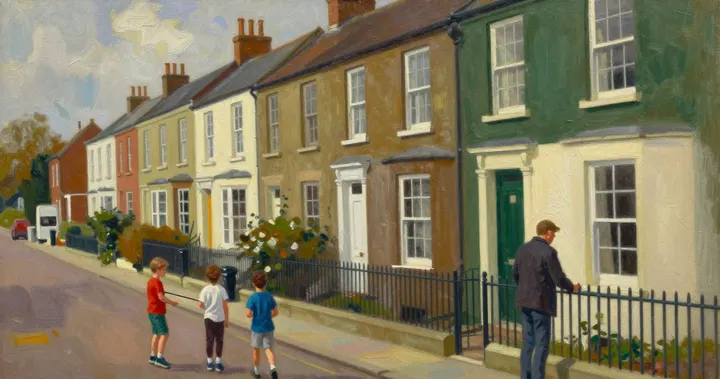
That is why the weekend feels so natural now. We plan our shopping, our visits and our sleep around it. Most of us have never known a week without it, so it seems part of nature, like the seasons. But it isn't. It is an agreement, renewed every Friday evening by millions of people who stop at roughly the same time. And like any agreement, it was argued over, tested and nearly broken before it settled into the shape we know.
A century of bargains
So the weekend wasn't invented in one place, by one person. It was bargained for over a century. There was a Monday that workers took, and a Saturday afternoon they traded it for. Later came a car maker's arithmetic and a child's voice on a poster.
Next Saturday, when the alarm doesn't go off, it might be worth remembering that someone once argued for that quiet morning.
What did a Saturday look like in your family when you were growing up? Tell us in the comments under the video on YouTube.